Showing posts with label Eternity. Show all posts

Thursday, April 9, 2026

The Tight Fingers of Pride

 Sabbath School

Growing in a Relationship with God 

Lesson 3 - Sunday 


Clinging to Dust or Living for Eternity

Scripture: First Epistle of John 2:15–17

There’s something revealing about the way pride works—it clings. Like tight fingers wrapped around something it refuses to release, pride holds on to status, control, recognition, and self-importance. And the harder it grips, the harder it becomes to receive anything from God.

In this passage, John lays out three clear warnings about pride and loving the world:

1. Love for the world crowds out love for God.
You can’t fully love both. When your heart is set on gaining approval, possessions, or power, your affection for God gets pushed to the margins. Pride subtly shifts your focus from God-centered to self-centered living.

2. Pride expresses itself in three ways: desire, sight, and status.
John describes “the lust of the flesh, the lust of the eyes, and the pride of life.” In plain terms: craving what feels good, chasing what looks good, and boasting in what makes you look important. Pride isn’t always loud—it often hides in ambition, comparison, and the need to be seen.

3. Everything fueled by pride is temporary.
The world and its desires are passing away. Pride invests everything in what won’t last. But the one who does God’s will is building something eternal. Pride says, “Build your name.” God says, “Surrender your life.”

Now the harder question—don’t dodge it:
How prideful are you, really?

Not the version you show others—the honest version.
Do you struggle to admit when you’re wrong?
Do you compare yourself to others to feel better?
Do you seek recognition more than quiet obedience?

Pride doesn’t just damage your relationship with God—it strains every relationship. It makes you less teachable, less compassionate, and more defensive. It builds walls where humility would build bridges.

If you feel resistance reading this, that’s worth paying attention to. Pride fights exposure. But freedom starts when you loosen your grip.

Prayer:
Lord, I confess that pride grips my heart more tightly than I realize. I see how easily I chase recognition, control, and my own way. Forgive me for loving the things of this world more than I love You. Soften my heart and loosen the grip of pride in my life. Teach me humility—not just in words, but in how I think, act, and respond to others. Help me to value what is eternal over what is temporary. Shape me into someone who reflects Your character—gentle, teachable, and surrendered. In Jesus’ name, amen.


Saturday, November 8, 2025

Longing for His Presence: Gathered at His Throne

 Lessons of Faith from Joshua - Sabbath School Lesson 7 - Thursday: Longing for His Presence

Longing for His Presence

Read Joshua 18:1–2.

When Joshua paused the allotment of the land, it was for a sacred reason: to gather the tribes before the Lord at Shiloh, where the tabernacle—the symbol of God’s presence—was set up. Before settling into their inheritance, Israel needed to draw near to God, to seek His guidance, and to be reminded that the land was not just a possession but a gift from His hand. Their success was never merely about territory; it was about relationship and worship. In calling the tribes together, Joshua demonstrated a truth still vital today: every step forward in life must begin in the presence of God.

As Christians, we do not have an earthly sanctuary containing the physical presence of God. Yet our hope is not less real—indeed, it is greater. Hebrews tells us that Jesus has entered a better sanctuary for us, “as a forerunner” (Hebrews 6:19–20). He did not enter with the blood of animals but with His own perfect sacrifice (Hebrews 9:11–12). Because of His ministry, we have “boldness to enter the Holiest” by His blood (Hebrews 10:19–23). The longing Israel felt as they gathered around the tabernacle is the same longing God invites us to bring before Him—except we now approach through a living Savior in a heavenly sanctuary.

Joshua teaches us not to rush into our inheritance—our blessings, our plans, our work—without pausing to seek the One who gives them. Israel gathered at Shiloh; we gather at the throne of grace. Their sanctuary was made with hands; ours is eternal. They saw the cloud and the fire; we cling to the hope anchored in Christ beyond the veil.

And yet, our longing is not fully satisfied. We still journey. We still wait. But the day is coming when longing will give way to seeing, when faith will become sight, and when Christ Himself will dwell among His people. On that day, no temple will be needed, “for the Lord God Almighty and the Lamb are its temple” (Revelation 21:22). Until then, we enter His presence by faith, draw near with confidence, and fix our hearts on the hope set before us.

Final Prayer
Lord, thank You that through Christ we can draw near to Your presence with confidence and hope. Teach us to pause before You, like Israel at Shiloh, seeking Your guidance before we move ahead in life. Anchor our hearts in Jesus, our High Priest and our hope. And stir in us a longing for the day when You will dwell among us forever and no sanctuary will be needed again. Until then, keep us faithful, worshipful, and near to You. In Jesus’ name, Amen.

Monday, September 22, 2025

Jesus Tabernacled With Humanity

EXODUS - Sabbath School - Lesson 13 - Thursday Commentary 


Jesus Tabernacled With Humanity

John 1:14

John declares, “The Word became flesh and made his dwelling among us” (John 1:14, NIV). The Greek phrase behind “made his dwelling” literally means “tabernacled.” Just as God’s presence filled the tabernacle in the wilderness, Christ came and lived among His people. The tabernacle was God’s chosen way to dwell in the midst of Israel, pointing forward to the day when He would come in person through His Son. In Jesus, God’s presence was not hidden behind curtains, but made visible in human flesh.

This truth transforms how we view Christ’s presence today. He promised, “For where two or three gather in my name, there am I with them” (Matthew 18:20). Just as the tabernacle was the meeting place between God and His people, so now Jesus Himself is that meeting place. Wherever His followers come together in His name, He is there—no walls, no temple required.

But His presence is not only communal; it is also deeply personal. In Revelation 3:20, Jesus says, “Here I am! I stand at the door and knock. If anyone hears my voice and opens the door, I will come in and eat with that person, and they with me.” The same God who filled the tabernacle with glory now seeks to fill human hearts with fellowship and life.

The story reaches its climax in Revelation 21:1–3. John sees the New Jerusalem descending, and hears the voice from heaven declaring: “Look! God’s dwelling place is now among the people, and he will dwell with them. They will be his people, and God himself will be with them and be their God.” The temporary tabernacle and Christ’s earthly ministry point toward this eternal reality: God will dwell forever with His redeemed people, face to face, in a new creation without sin, sorrow, or separation.

What is presented to us here? The great arc of Scripture shows God’s persistent desire to be with His people—from the tabernacle in the wilderness, to the incarnation of Jesus, to His presence among believers today, and finally to the eternal dwelling of God with humanity in the New Jerusalem. The invitation is clear: open the door to His presence now, and look forward with joy to dwelling with Him forever.

Thursday, May 1, 2025

Only What’s Eternal Will Last


“Only What’s Eternal Will Last”

Scripture Reading: Matthew 6:19–21
"Do not store up for yourselves treasures on earth, where moths and vermin destroy, and where thieves break in and steal. But store up for yourselves treasures in heaven..."

We live in a world that praises success—degrees, wealth, buildings, titles, and achievements. And let’s be honest, much of it can be impressive. Skyscrapers that touch the clouds, medals of honor, and careers built over decades—these things seem solid, even eternal.

But Scripture reminds us of a sobering truth: all earthly accomplishments, no matter how great, will one day turn to dust. The kingdoms of Babylon, Persia, Greece, and Rome once ruled the world—and now, they're only memories, ruins, and history books.


Earthly Glory Fades
In Daniel 2, the image of gold, silver, bronze, and iron—all representing powerful empires—was shattered by a stone. That stone, representing God's eternal kingdom, crushed what man built. That’s the reality: no award, bank account, or human glory can stand before God’s eternal plan. Everything here is temporary.

So if you're building your life only on what this world offers, you're building on sand. A promotion may satisfy today, but it can't follow you into eternity. A perfect reputation may comfort now, but it won’t matter when you stand before the judgment seat of Christ.


Keep Heaven in View
Paul reminds us in Philippians 3:8, "I count everything as loss because of the surpassing worth of knowing Christ Jesus my Lord." That’s the right perspective. When we remember that earthly glory fades, we shift our focus to what matters: knowing God, loving people, and advancing His kingdom.

This doesn’t mean we stop working hard or pursuing excellence. It means we don’t worship our work, our status, or our achievements. We do all things for the glory of God, not the glory of self.


Right Priorities for Eternal Impact
Keeping this perspective helps us prioritize. We spend time with our families instead of chasing another dollar. We invest in prayer instead of only profit. We measure success by faithfulness, not fame.

Ask yourself: Are you investing more in things that will vanish—or in things that will last? Are your treasures stored in your resume or in heaven?


Cling to Jesus Alone
One day, the titles, the trophies, the trends—they’ll all disappear. But what you do for Christ will echo in eternity. So live with that in mind. Build your life on what cannot be shaken. Love God, serve others, and hold loosely to everything else.

Because in the end, only one kingdom remains—and that’s the one worth living for.

More: Sabbath School Lesson 5: The Nations Part 2

Sunday, April 27, 2025

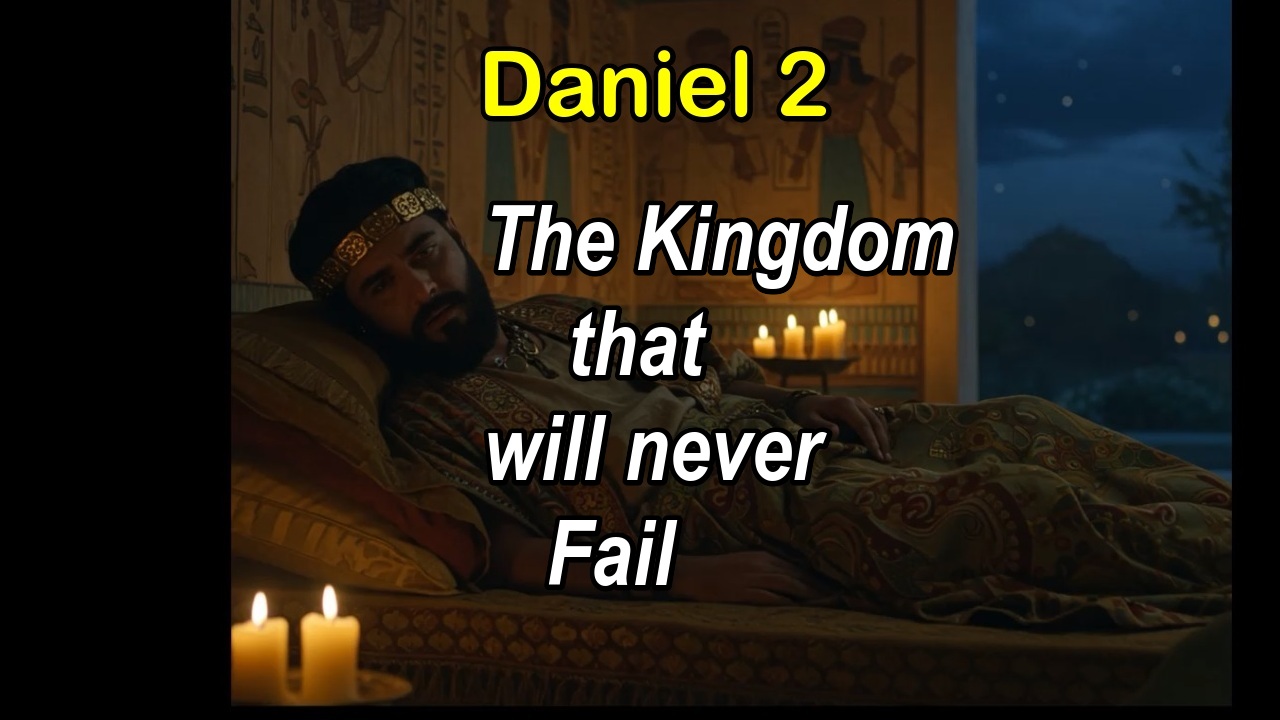
The Kingdom That Will Never Fall


In Daniel 2, King Nebuchadnezzar dreams a dream so vast and mysterious that none of his wisemen could explain it—until Daniel, empowered by the living God, steps forward. In verses 31–35, Daniel describes the king’s vision: a mighty statue made of various metals—gold, silver, bronze, iron, and clay—only to be shattered by a stone "cut out without hands" that becomes a mountain filling the whole earth.

The Frailty of Human Kingdoms
Each material in the statue represents a kingdom: Babylon (gold), Medo-Persia (silver), Greece (bronze), Rome (iron), and the divided kingdoms (iron mixed with clay). Each was mighty in its time, yet none lasted. The progression from gold to iron and clay shows a steady decline—not just in strength, but in unity and moral quality.
Truth: Every human empire—no matter how glorious—will crumble. Wealth, military might, and political alliances cannot prevent the downfall of kingdoms built on human pride and ambition.

God's Sovereignty Over History
Nebuchadnezzar thought he ruled by his own power. Daniel’s interpretation reminds us that God raises up kings and removes them. The sweep of history is not random—it is under the hand of the Sovereign Lord.
Truth: History is not a chaotic series of events but a carefully directed story that leads to God's final and eternal kingdom.

The Coming of the Eternal Kingdom
The most stunning part of the dream is the stone "cut without human hands," striking the statue and growing into a mountain that fills the earth. This is Christ and His kingdom—founded not by human effort, but by divine action. His kingdom will never be destroyed or succeeded by another.
Truth: Only Christ’s kingdom is eternal. In a world of shifting powers and uncertainties, we can build our lives on the unshakable Rock—Jesus Christ.

What We Should Remember
Daniel 2:31–35 is more than ancient history—it is a map showing us where to place our hope. Not in politics. Not in wealth. Not in human leaders. But in the everlasting kingdom of God.
When everything around us seems unstable, remember: God's kingdom will stand forever. Are you part of it?

Today, the invitation is simple. Trust not in the fading kingdoms of this world, but in the eternal King who invites you into His unshakable kingdom. Amen.

More: Sabbath School Lesson 5: The Nations Part 2